Health and Safety Policy — London Carpet Cleaners
Purpose: The health and safety policy sets out the company's commitment to protect staff, clients and the public during carpet, upholstery and floor cleaning activities. As practitioners of professional carpet cleaning in London we adopt practical risk management, clear communication and a culture of safety-first operations. This policy defines responsibilities, core principles and management arrangements that apply across domestic and commercial carpet cleaning work. The objective is to prevent injury, limit exposure to hazards and ensure consistent, safe delivery of cleaning services.nnScope and Responsibilities
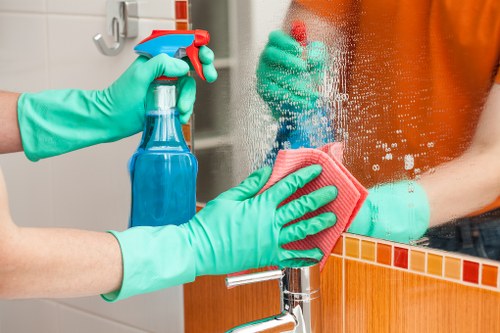
Management carries overall responsibility for developing and maintaining a safe working environment for all cleaning tasks. Supervisors and team leaders implement safe systems of work and ensure operatives are competent. Each operative engaged in carpet care and maintenance is required to follow instructions, use issued PPE and report hazards promptly. Contractors are expected to comply with this policy. Clear lines of responsibility and visible leadership support consistent safety practice on every job.nn![A close-up view of a person wearing bright yellow rubber cleaning gloves applying blue cleaning spray from a transparent spray bottle onto a blue cloth, which is laid out on the edge of a white bathroom bathtub. The background features beige tiled walls with a shiny chrome faucet and a small section of a mirror visible above the tub. The scene depicts a residential bathroom area with surfaces prepared for cleaning, emphasizing attention to hygiene and tidiness typical of professional cleaning service standards in London, near [POSTCODE]. The image illustrates proper cleaning techniques involving spray application and wiping, relevant to the services offered by London Carpet Cleaners in maintaining sanitary conditions in homes or commercial bathrooms.](/pub/_photos/cleaning/f1435212264.jpg) Key Safety Principles drive our daily operations: risk assessment, control of hazardous substances, safe manual handling, equipment safety and incident reporting. These principles are applied through procedures and on-site supervision. Core responsibilities include:
Key Safety Principles drive our daily operations: risk assessment, control of hazardous substances, safe manual handling, equipment safety and incident reporting. These principles are applied through procedures and on-site supervision. Core responsibilities include:
- Management: implementing the policy, allocating resources and reviewing performance.
- Supervisors: monitoring operations, enforcing PPE use and ensuring safe practices.
- Operatives: carrying out tasks safely, maintaining equipment and reporting defects or near misses.
Risk Assessment and Safe Systems
Formal risk assessments are completed for each cleaning activity, from targeted stain removal to deep-extraction cleaning. Assessments identify hazards, evaluate likelihood and determine controls such as area isolation, extraction ventilation and specification of PPE. Safe systems of work are communicated before tasks begin and reviewed when conditions change. Signage and cordons protect clients and the public, while scheduling seeks to minimise interaction with occupied spaces where practical.nn The safe handling of cleaning products and solvents is a priority. A register of cleaning agents and material safety information is maintained and accessible. Operatives are trained in correct dilution, storage and disposal. When chemical treatments are used, staff will employ appropriate containment and application techniques to minimise exposure and environmental release, and will follow supplier guidance and best practice. Spill kits and containment procedures are available, and emergency steps are communicated to all staff.
Equipment and Vehicle Safety is managed to protect operatives and the public. Machines, hoses and electrical appliances are inspected before use and maintained on a scheduled basis. Portable appliance testing is performed where required, and defective equipment is removed from service. Vehicles transporting equipment are loaded and secured properly; drivers follow safe driving practices and on-site unloading is managed with attention to pedestrian routes and access restrictions.
nPersonal Protective Equipment and Hygiene Appropriate PPE, including gloves, eye protection, respiratory equipment and non-slip footwear, is provided according to task-specific risk assessments. PPE selection is risk-based and kept in good condition. Personal hygiene measures reduce cross-contamination: staff are expected to wash hands, change gloves between properties and launder uniforms as directed. Storage of clean and contaminated materials is controlled to protect employees and clients.
nn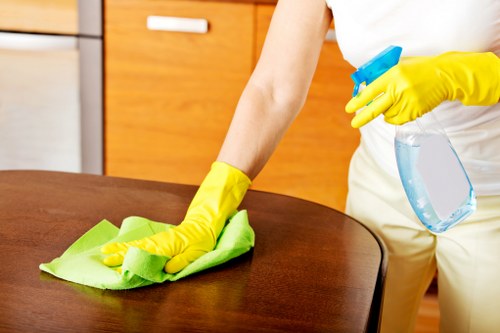 Training, Competence and Supervision The company provides induction and ongoing training covering safe cleaning methods, manual handling, chemical safety and emergency response. Competence is assessed and documented; new staff receive supervision until they meet required standards. Toolbox talks and briefings reinforce safe practices and communicate procedural changes. Training records are retained to demonstrate capability and to support continual improvement of skills.